

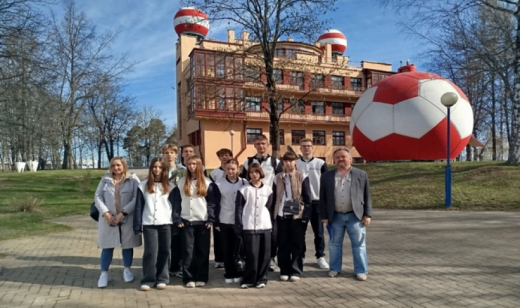
On April 15, Belhydromet welcomed guests — students of the educational institution "National Children's Technopark" who are studying in the field of "Natural Resources." An educational excursion was organized for the students, allowing them to glimpse into the world of hydrometeorology and radiation monitoring and learn about the work of specialists from the inside.
The excursion began with a presentation by Georgy Kamlyuk, a leading meteorological engineer from the Service for Meteorologica and Climate Monitoring, Database. The expert introduced the students to the history of the hydrometeorological service of Belarus. Georgy Georgievich emphasized its important role for the country — Belhydromet's work directly affects the safety and comfort of citizens and helps plan activities across a wide range of sectors, from agriculture to transportation.
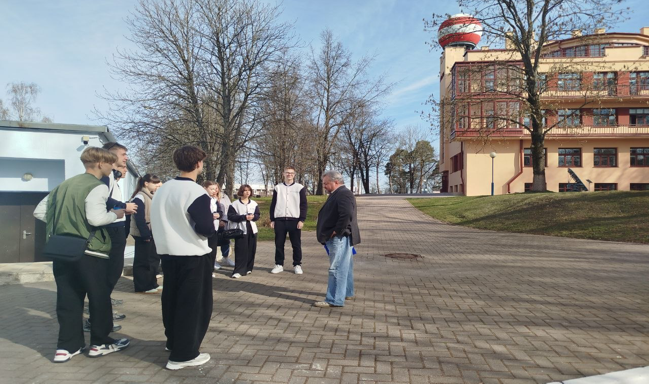
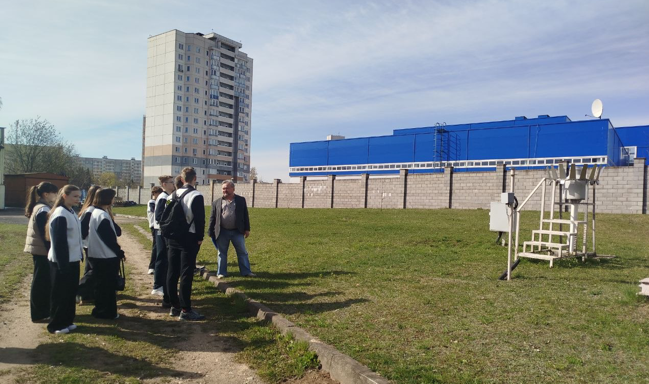
After the theoretical part, the students headed to the automatic meteorological site. There, they became acquainted with meteorological instruments. A specialist explained how the devices help collect accurate data on the state of the atmosphere — temperature, humidity, wind speed and direction, atmospheric pressure, and other parameters.
The students' knowledge was expanded by Alla Shaybak, Head of the Operational Radiation Control and Emergency Monitoring Department of the Radiation Monitoring Service. She covered key aspects of monitoring the radiation situation in Belarus. The students learned how the integrated monitoring system works, what methods are used to assess levels of radioactive contamination of the environment, and what measures are taken by government authorities to ensure public radiation safety.
During the conversation with the students, Alla Mikhailovna drew particular attention to the importance of continuous radiation monitoring in Belarus. She reminded them that April 26, 2026, will mark the 40th anniversary of the Chernobyl nuclear power plant accident — an event that fundamentally changed approaches to radiation safety around the world.
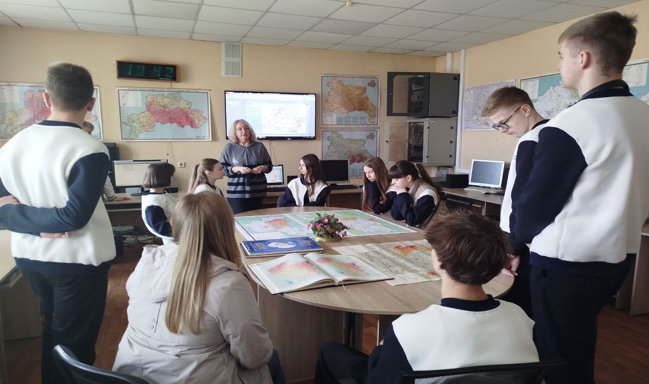
Alla Shaybak emphasized: Belarus has an extensive network of radiation monitoring stations — they track radiation levels in real time; decades of accumulated experience allow for a rapid response to any changes in the radiation situation; modern technologies and methodologies ensure high measurement accuracy, guaranteeing public safety.
"Today we can confidently say that the radiation situation in most of the country is stable, and the gamma radiation dose rate is within natural background levels," noted Alla Shaybak. "But the memory of Chernobyl teaches us to remain vigilant. Continuous radiation monitoring is not just a job — it is our responsibility to future generations!"
Equally exciting was the part of the excursion led by Marina Luksha, Deputy Head of the Meteorological Forecast Service. The expert explained how weather forecasts are made — from primary data collection to the final forecast that residents of the country see. The students learned about the specifics of a forecaster's work and the high level of responsibility associated with this profession, as well as the importance of accuracy and timeliness in making forecasts.
To conclude, a quiz was organized for the young guests by specialists from the Service for Meteorologica and Climate Monitoring, Database — Anna Nedobega and Alexander Savitsky. In an interactive format, the students reinforced their newly acquired knowledge and learned about safety procedures during adverse and dangerous hydrometeorological phenomena: thunderstorms, squalls, heavy precipitation, etc.
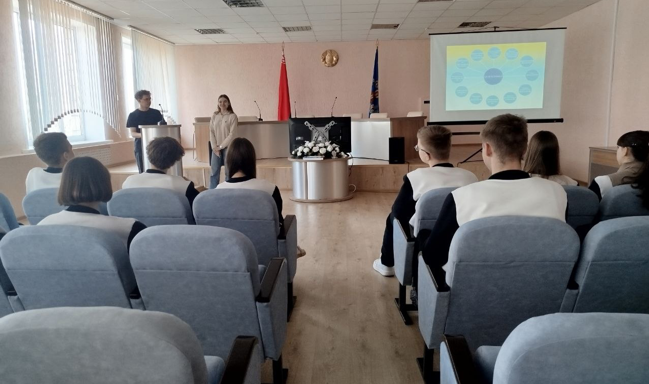
The excursion sparked keen interest among the students and may have inspired some of them to connect their future with hydrometeorology. Belhydromet is pleased to support educational initiatives and share its experience with the younger generation!
© Belhydromet, 2016-2026