


On June 9, 2026, a press conference titled "Spring 2026: what hydrometeorological monitoring revealed" was held at the Republican Unitary Enterprise "Dom Pressy" (House of Press), attended by specialists from Belhydromet.
The experts presented a detailed analysis of the past spring season, highlighting its key hydrological, agrometeorological, and climatic features.
Olga Baklanova, Head of the Climate Change Studies Department of the Meteorological and Climate Monitoring and Data Fund Service at Belhydromet, presented the climatic characteristics of spring 2026.

March 2026 proved to be anomalously warm. The average air temperature across Belarus was +5.8°C, which is 5.0°C above the climatic norm. Records for average monthly temperature were broken at 90% of stations. The transition of the average daily air temperature above 0°C (the start of climatic spring) occurred 1–2 weeks earlier than usual. The sustained transition above 5°C (the start of the growing season) over most of the country also occurred at a record early date (20–30 days earlier than normal). Despite the warmth, absolute March maximum air temperature records were not exceeded. The maximum temperature of +20.0°C was recorded on March 31 at the Kostyukovichi station. Monthly precipitation totaled only 3.8 mm (10% of normal). Absolute monthly precipitation minima were broken at all observation points in the eastern half of the country.
April 2026, in contrast, was colder than normal. The average air temperature across Belarus was +6.4°C, which is 1.4°C below the climatic norm. The third decade of the month was the coldest. The minimum air temperature for the month was -5.2°C (April 29, Drogichin station). The April maximum air temperature (+19.6°C) was recorded on April 1. Precipitation for the month amounted to 24 mm (61% of normal), resulting in a moisture deficit over most of the country.
May 2026 was characterized by warm weather. The average air temperature was +14.1°C, which is 0.7°C above the climatic norm. The sustained transition of temperature above +10°C occurred on May 1–3. The maximum air temperature reached +31.0°C on May 21 (Slavgorod and Zhlobin stations). The minimum temperature was -2.3°C (May 2, Bragin station). Monthly precipitation totaled 71 mm (112% of normal), with monthly precipitation records broken at Minsk station and daily records broken at Berezino station.
Overall, spring 2026 turned out to be the warmest spring in the entire period of instrumental observations since 1881, with an average temperature of +8.8°C (+1.5°C above normal). During the season, 99 mm of precipitation fell (71% of normal). The snow cover completely melted by the end of March. Throughout the season, there were rains of varying intensity, fog, and thunderstorms with hail. Increases in wind speed to 25 m/s or more were recorded. This phenomenon was observed twice at the Slavgorod station: on April 23, wind speed reached 29 m/s, and on May 27, wind speed was 26 m/s.

Marina Gritskevich, Head of the Meteorological Forecast Service at Belhydromet, added that in March, the weather was determined by warm air masses of Atlantic and southern origin, leading to a record warm and dry month. April was characterized by the influence of cold air masses from northern latitudes, resulting in a negative temperature anomaly and a precipitation deficit. May featured contrasting weather with alternating warm and cold periods and active convective activity.
Marina Gritskevich also reported that twice a year (at the end of May for the summer season and at the end of November for the winter season), the North Eurasian Climate Forum is organized, which brings together the efforts of scientists and specialists in the field of long-range forecasting to produce seasonal forecasts. Belhydromet specialists are regular participants in this forum.
The participants of the climate forum summarized the forecasting information and adopted the final wording of the consensus forecast for the upcoming summer of 2026 across North Eurasian regions. According to this forecast, a positive air temperature anomaly is expected over most of Belarus, with a probability of up to 60%; in the north of the country, temperatures are expected to be near normal. Regarding the moisture regime: a precipitation deficit is expected over most of the country, with a probability of 45–60%, up to 75% in the extreme southwest, and only in the northeast of Belarus is precipitation expected to be within the climatic norm.
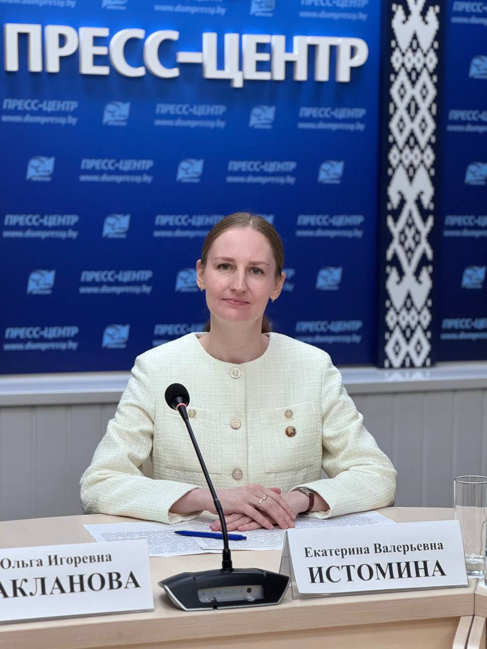
Ekaterina Istomina, Head of the Hydrology and Agrometeorology Service at Belhydromet, noted that despite heavy snowfall in winter, spring processes on the country's water bodies progressed slowly and calmly. The weather pattern in March, with daytime positive temperatures and nighttime negative temperatures, along with a lack of precipitation, contributed to reduced surface runoff. The rate of water level rise in rivers during the formation of spring flood peaks was low.
The spring flood peaks occurred in March and early April and were close to, or somewhat below, the long-term average values. During the flood period, inundation of floodplain areas was observed. Water levels approached dangerous high levels on the Pronya River (a tributary of the Sozh), as well as on the Pripyat tributaries – the Sluch, Ubort, and Ptich rivers. According to the Ministry of Emergency Situations, flooding of residential houses, farmsteads, outbuildings, bridges, and road sections was recorded in the Gomel, Mogilev, and Vitebsk regions.
In May, water level fluctuations were observed on rivers, with a tendency to rise in the middle of the month due to precipitation. However, given the low spring flood levels and minor rises in May, river discharge by the end of spring was below normal. Currently, water levels are predominantly falling on rivers, and localized precipitation is not causing significant rises. Nevertheless, difficulties in river transport operations are being observed on certain navigable sections of the Neman, Dnieper, and Sozh rivers.
The warm weather in March contributed to the rapid destruction of snow cover and soil thawing. Over most of the republic, by the middle of the month, the snow had melted, and the soil had thawed to its full depth. The drying of the soil under the influence of the sun allowed field work to begin, including closing in soil moisture, tending to winter crops, and spring sowing. Under the influence of warm weather, the soil warmed up, and by the end of March, a moisture deficit was already felt on light soils in the Gomel region.
April was generally characterized by favorable agrometeorological conditions for field work and the sowing of early spring crops. The upper 10-cm soil layer was moderately moist. However, the cold weather for most of the month restrained the development of winter crops, fruit plantations, and perennial grasses. Night frosts posed a danger to flowering fruit crops, and low temperatures led to damage to rapeseed, winter grains, and spring crop seedlings.
In May, agrometeorological conditions improved over most of the republic. Rains restored the moisture supply for agricultural crops. Moderate temperature conditions and sufficient moisture favored the growth and development of winter rapeseed, the formation of ears in winter grains, and tillering and ear formation in spring grains. However, in the Vitebsk region, frequent rains on heavy soils led to waterlogging, complicating field work.
Of particular concern is the southwestern part of Belarus, where a precipitation deficit has persisted since the beginning of the growing season. In May, a deterioration in moisture supply was observed there, with areas affected by soil drought expanding, reaching the criteria for a hazardous agrometeorological phenomenon in several districts of the Brest region. Desiccation of the topsoil hindered the emergence of heat-loving crop seedlings and the implementation of agrotechnical measures.
Currently, agrometeorological conditions over most of the republic are favorable for crop formation; however, severe soil desiccation and uneven precipitation distribution in the southwest of the country continue to create a difficult situation.
A video recording of the press conference can be viewed at the provided link.
© Belhydromet, 2016-2026